
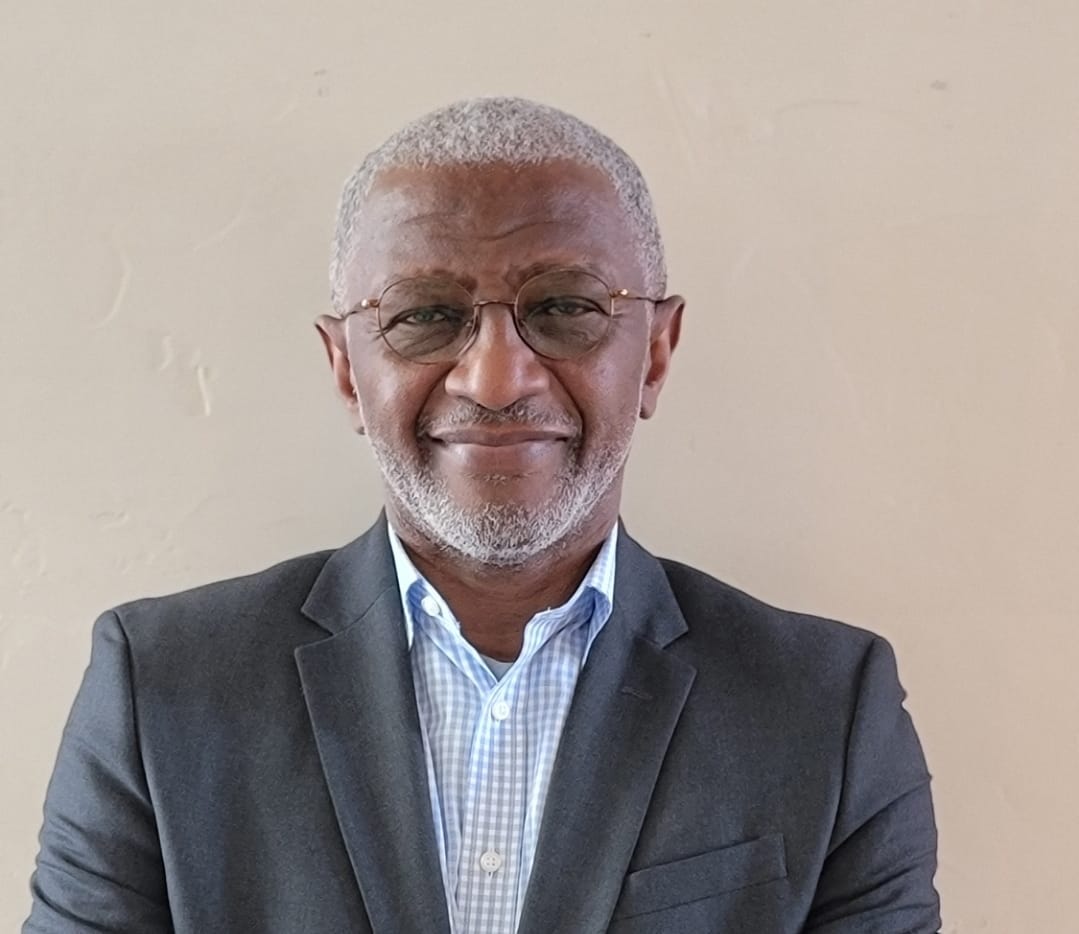
The question behind the interview
On September 9, 2026, Sierra Leone’s Chief Minister, Dr. Moinina David Sengeh, appeared on AYV Television’s State of the Nation, interviewed by Umaru Fofana. According to later reports, he said he did not know exactly how much he earned because he had not paid attention to the amount. The exchange generated public debate. Some saw it as detachment from the circumstances of ordinary Sierra Leoneans; others saw the controversy as a distraction from his office.
The more consequential question is not whether a senior official can recite a pay slip from memory. It is what the government officially pays its Chief Minister, what the package includes, which authority approves it, and whether citizens can independently verify it.
In a subsequent Radio Democracy interview, Sengeh reportedly explained that he opened the account that receives his earnings during his student years at Harvard and that another person has managed it since he was 19. That explanation may account for his limited attention to bank deposits. It does not establish the remuneration attached to his appointment, which falls under public financial administration rather than personal banking arrangements.
Nothing in the records reviewed for this article establishes that Sengeh received unauthorized compensation or concealed earnings. The inquiry is about the documentary record of an office funded through public resources.
Who is responsible for public remuneration?
Sierra Leone has several institutions with roles in government compensation. The Human Resource Management Office manages civil-service personnel and payroll functions; the Accountant-General’s Department handles central government accounting and payments; and the Ministry of Finance budgets and reports expenditure. Their responsibilities should not be presumed identical across civil servants, political appointees and other public officers.
The Wages and Compensation Commission Act, 2023, raises a particularly important question. The Commission’s statutory mandate concerns the structure and certification of public-sector salaries, allowances and other benefits. The Commission must establish its precise operational coverage and implementation for political officeholders, rather than inferring it merely from the law’s broad language.
At a government press conference in February 2026, the Commission’s chairman reportedly said its mandate extends to the President and members of the Executive, and outlined a pay-harmonization exercise. That makes the Commission an appropriate institution to ask whether the Chief Minister’s compensation has been certified, or whether an earlier arrangement remains in force.
What the Ministry of Finance draft records
A publicly accessible draft of the Government of Sierra Leone’s Budget Execution Report for January–June 2025, hosted in the Ministry of Finance’s October 2025 website directory, records a political-class wage bill of NLe13.8 million in January and NLe89.5 million in February. The draft attributes the increase principally to a one-off rent allowance payment. The difference is NLe75.7 million. These are aggregate category-wide figures, not the Chief Minister’s individual earnings.
The cover of the Ministry-hosted copy is visibly watermarked “DRAFT.” A separately published, non-draft edition has not been established in this investigation. The figures are therefore attributed to the official draft and are not presented as final audited expenditure. The October 2025 website directory indicates the location of the file, not its precise drafting or approval date.
The reported allowance payment illustrates why a basic monthly salary alone may not describe an official’s total remuneration. A complete accounting should distinguish base salary, periodic allowances and other authorized benefits. It would be incorrect to treat the entire February increase as an allowance amount for any one officeholder.
What the Auditor-General found
The Auditor-General’s 2023 report, as summarized in contemporaneous reporting, raised concerns about personnel verification in the Office of the Chief Minister. Fourteen employees initially failed to present themselves for verification, and relevant personnel files were not available at the time. Subsequent follow-up reportedly verified 13, leaving one case unresolved at that stage. The initial observation and the subsequent corrective action must be read together.
These findings concern historical payroll documentation and internal controls. They do not demonstrate that the Chief Minister’s personal remuneration was improper. Their relevance here is narrower: reliable personnel and payment records are necessary to verify public expenditure independently.
The published Auditor-General’s report is a legitimate source for examining these matters. The article does not infer corruption from an audit observation, nor does it overlook management responses and the auditors’ final status assessments.
The public-access question
Sierra Leone’s Right to Access Information Act, 2013, establishes a formal route for requesting records held by public authorities, subject to statutory procedures and exemptions. A request for an approved salary scale, official allowances, the instrument authorizing them, and the responsible accounting institution differs from a request for a person’s private bank account or unrelated personal financial information.
The responsible authorities should be asked to identify the Chief Minister’s approved basic salary; all recurring and periodic allowances and benefits; the legal or administrative authority for each; the relevant payroll category; and the extent to which the Wages and Compensation Commission has certified the package. They should also explain how a citizen can inspect the applicable records.
The fact that government maintains payroll records does not by itself prove those records are published or disclosable in every detail. Equally, the absence of an immediately accessible figure does not prove unlawful withholding. The proper test is to request the records and assess the response against the applicable law.
A straightforward test of accountability
The Chief Minister’s reported inability to state his salary is an unusual entry point into a routine government obligation: accounting for public-fund expenditure. The Ministry of Finance reports political-class payroll expenditure; personnel and accounting offices administer payments; the Auditor-General tests controls; and the Wages and Compensation Commission has a statutory role in public-sector remuneration.
The documents examined here do not yet establish a verified individual breakdown of the Chief Minister’s current salary, allowances and other benefits. That limitation is material and should not be filled by conjecture.
The Chief Minister may not know the figure. The institutions responsible for authorizing, recording and paying it should. The question now is whether the public can obtain that figure, and it requires an official answer.
About the Author
J. Amadu Massally is a Sierra Leonean author, independent researcher, and cultural historian whose work connects African and diasporic histories through documentary evidence and historical inquiry. He writes on governance, public accountability, and the enduring connections between Africa and its diaspora.
Documentary sources and verification notes
1. Government of Sierra Leone, Ministry of Finance, Budget Execution Report, First Half, January–June 2025 (officially hosted DRAFT; cover watermark confirmed). https://mof.gov.sl/wp-content/uploads/2025/10/First-Half-Fiscal-Report-for-FY2025.pdf
2. Wages and Compensation Commission Act, 2023. https://sierralii.gov.sl/akn/sl/act/2023/19/eng%402023-06-08/source.pdf
3. Auditor-General’s Report on the Accounts of Sierra Leone, 2023. https://website.auditservice.gov.sl/wp-content/uploads/2024/12/2023-AGs-REPORT-Final-2-12-24.pdf
4. Right to Access Information Act, 2013. https://www.wipo.int/wipolex/en/legislation/details/14563
5. Sierra Leone News Agency, February 2026, reporting on the Wages and Compensation Commission’s pay-harmonization mandate. https://www.slena.gov.sl/post/wages-and-compensation-commission-takes-full-control-of-public-sector-pay-structure
6. Sierraloaded, September 15, 2026, account of Sengeh’s Radio Democracy explanation. https://sierraloaded.sl/news/david-sengeh-reason-behind-salary-disclosure/
Verification note:
Interview descriptions are attributed to published accounts rather than a verbatim transcript. The Ministry of Finance report is visibly marked DRAFT. The Chief Minister’s individual remuneration schedule and institutional responses have not been obtained.