
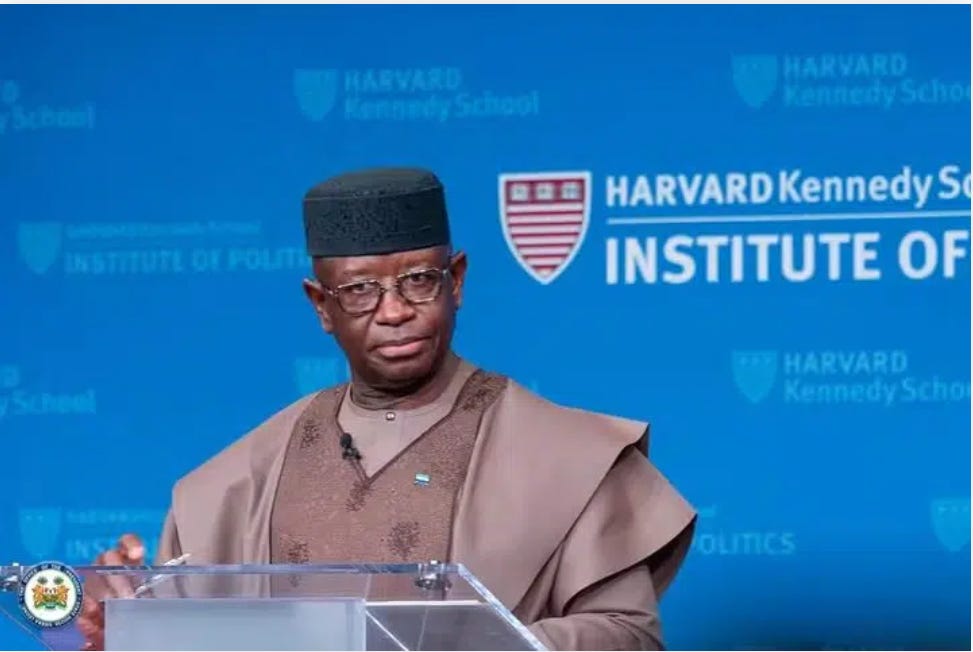
On 29 September, President Julius Maada Bio gave the keynote at Harvard Kennedy School’s JFK Jr. Forum. His theme was leadership and democratic resilience in Africa. Two days later, the European Commission froze €18 million in budget support to his government, because Sierra Leone will not hand over the Netherlands’ most wanted criminal.
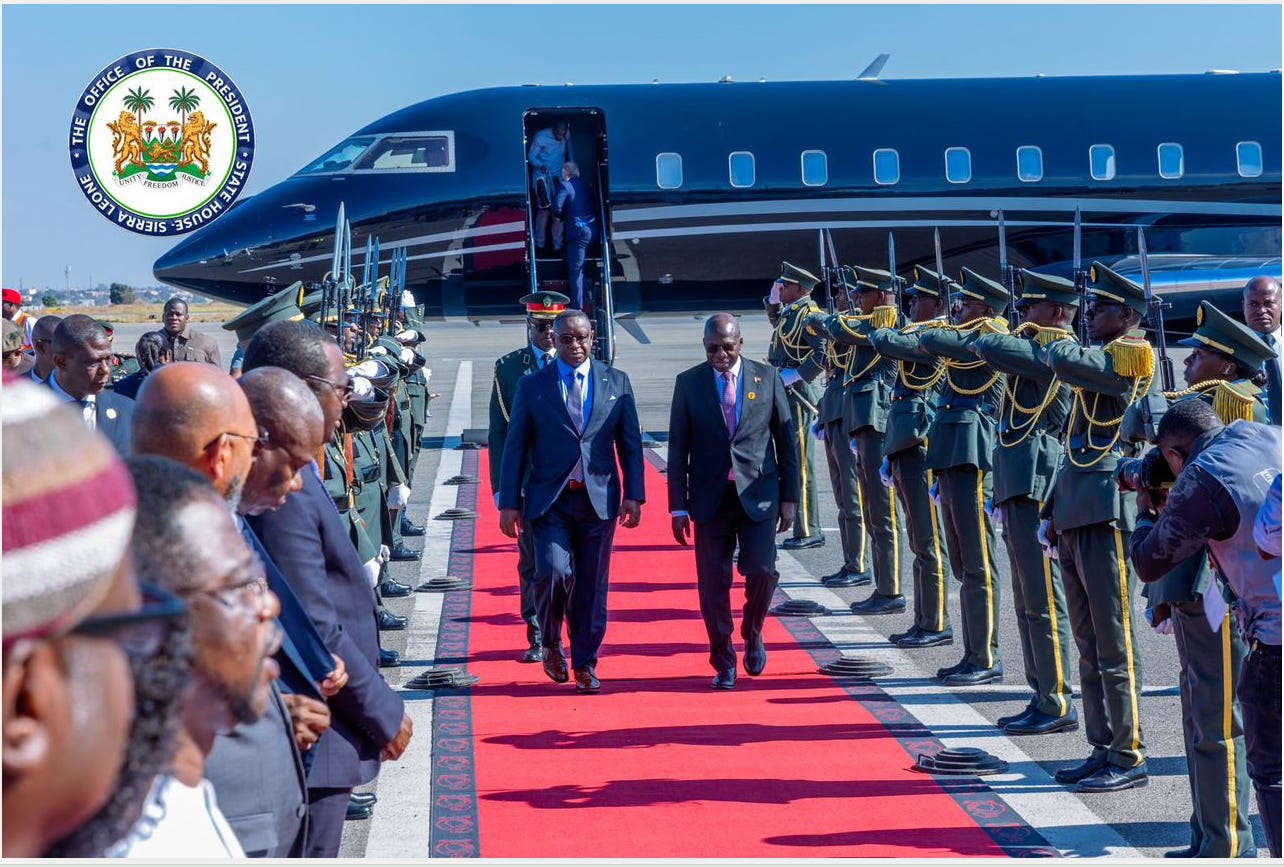
That week captures a pattern. Sierra Leone has recently sat on the UN Security Council, chaired ECOWAS and, on 4 September, steered a UN resolution making 27 November an international day against child marriage. Abroad, the Bio government presents itself as a reformer. At home, the record tells a different story, and the international credit it has built is starting to run out.
This is not an argument against diplomacy. A small country deserves a voice, and the child-marriage campaign rests on a real achievement: the 2024 law banning marriage under 18. The problem is that standing abroad has been treated as a substitute for results at home, rather than a product of them.
A fugitive near the front pew
Jos Leijdekkers, known as “Bolle Jos,” has been sentenced to around 80 years in total in the Netherlands and Belgium for cocaine trafficking. In January 2025, Reuters verified footage of him at a New Year’s Mass, sitting two rows behind President Bio. The head of immigration was later fired after a video showed him with Leijdekkers. The Netherlands handed over a formal extradition request in February 2025. Almost 20 months on, he has not been arrested.
On 11 September, Chief Minister David Sengeh called the Dutch pressure “neo-colonialism” and said the security services did not know where Leijdekkers was. Sierra Leone has no extradition treaty with the Netherlands, and sovereignty is a legitimate concern. But a government cannot lecture on democratic resilience while saying it cannot find a convicted trafficker who was filmed at Mass two rows behind its president.
An economy that never recovered
Inflation peaked at about 55% in October 2023. The government brought it down to around 4% by December 2025, and deserves credit for that. But it has risen every month this year, reaching 15.66% in August. Food makes up roughly 40% of the consumer price basket, so the poorest households feel it first.
The fiscal discipline praised in Washington was paid for at home. The World Bank notes that the deficit fell partly through cuts to capital spending and a build-up of arrears. The IMF’s latest review records that the government missed its targets on domestic arrears, school feeding and social spending. Suppliers, schoolchildren and the poor absorbed the adjustment. The political class did not. The Finance Ministry’s own fiscal report shows that in 2024 Parliament, where both the SLPP and the APC sit, spent NLe15.6 million on overseas travel, nearly three times its NLe5.6 million budget. Austerity, it turns out, is something that happens to other people.
Drugs emergency declared, but not funded
Kush, a cheap synthetic drug, has torn through a generation with few jobs. In 2023, 1,865 of the 2,955 people admitted for drug abuse to the country’s only psychiatric hospital were Kush cases. Bio declared a national emergency in April 2024 and promised treatment centres in every district. Researchers have since found that the response relies largely on arrests and detention, with rehabilitation facilities running at three times capacity.
The Shrinking civic space
On 10 August 2022, cost-of-living protests turned violent and six police officers were killed. The US State Department reported that police shot and killed 30 protesters, mostly unarmed young people. The government’s own inquiry called the events an insurrection, and Amnesty International found, more than a year later, that none of the civilian deaths had been investigated.
The pattern has continued. In August 2026, police banned a peaceful march to State House over constitutional amendments, using powers under the 1965 Public Order Act. That law’s protest restrictions were written under an SLPP government, kept by every APC government that followed, and are enforced today by an SLPP government again. In 2022, Andrew Lavali of the Institute for Governance Reform told CIVICUS that police had refused permission to protest for 15 years, a span covering both parties in power. Neither side has earned the right to complain about the other.
Activist Zainab Sheriff, chair of the Wi Duti movement, was arrested over remarks at an opposition rally, denied bail four times and in April sentenced to more than four years for incitement. A court found the charges proven; the Media Foundation for West Africa called her detention and conviction a crackdown on dissent.
Meanwhile, 11 civilians and 24 soldiers are serving long sentences over the November 2023 attack the government calls a coup attempt, in which about 21 people died. Former president Ernest Bai Koroma, charged with treason over the same events, was never tried. In July, the Attorney-General dropped the case without giving reasons; the information minister later cited his health. Some accused will serve decades. An activist is serving years for a speech. The most senior accused goes free on a one-line reference to his health. That is not the rule of law. It is justice by political convenience, selective and opaque.
On the same day as the Harvard speech, CIVICUS, a global civil-society alliance, and three partner groups including Sierra Leone’s Campaign for Good Governance told the UN Human Rights Council that Sierra Leone had partially implemented just one of 17 civic-space recommendations from its last review. This time, it accepted none on the harassment of activists and journalists.
Reform on paper
After the disputed 2023 election, the government and opposition agreed on 80 electoral reforms, with ECOWAS, the UN and the Commonwealth as guarantors. Abroad, that process is cited as proof of good faith. At home, Parliament struck out the recommendation allowing independent presidential candidates, and the commitment to restructure the Electoral Commission by 31 December 2026 is three months from its deadline.
The way forward
The government’s defenders have a serious case, and it deserves to be heard in full. Much of the 2022–23 inflation was imported, as fuel and food prices spiked worldwide and the dollar strengthened. Starting from 55%, the government brought inflation under control within two years and posted the country’s first-ever primary budget surplus. In June, the IMF completed its third programme review and approved a new resilience arrangement alongside it. The 2024 child-marriage law and the 2020 repeal of criminal libel are genuine liberal reforms that the previous APC government never delivered. And for a small, aid-dependent state, a seat at every table is not vanity. It is how you attract investment and allies.
All of that is true, and none of it answers the charge. Global shocks explain why prices rose. They do not explain why, when the bill came, schoolchildren and local contractors paid it while Parliament spent nearly three times its travel budget. An IMF review measures whether the books balance, not whether citizens stand equal before the law. And a government that repealed criminal libel in 2020 has no excuse for jailing an activist over a rally speech in 2026. The reforms show what this government can do when it chooses. The rest of the record shows what it chooses not to do.
Four steps would start to close the gap. Publish domestic arrears and the full cost of foreign travel and summits. Investigate every death from August 2022, and apply the law evenly. Pass the electoral reforms as agreed. And let Sierra Leone’s own courts decide on Leijdekkers, in public.
None of this requires a summit or an award. What is at stake is concrete. In 2028, Sierra Leoneans will vote again. Unless the Electoral Commission is rebuilt as both parties promised, they will vote under rules the vast majority of Sierra Leoneans never agreed on, and the country risks reliving the dispute that followed 2023. A generation is being lost to Kush while treatment centres remain a promise. Sierra Leone can still become the country its government officials describe. But that country has to be built in Freetown and the districts, not announced in London, Boston and New York.
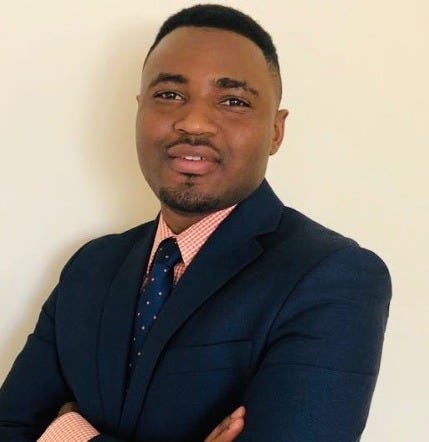
About the author: Kelfala Lebbie is a Sierra Leonean who has worked in international development for over a decade, focusing on governance and public-sector reform.