
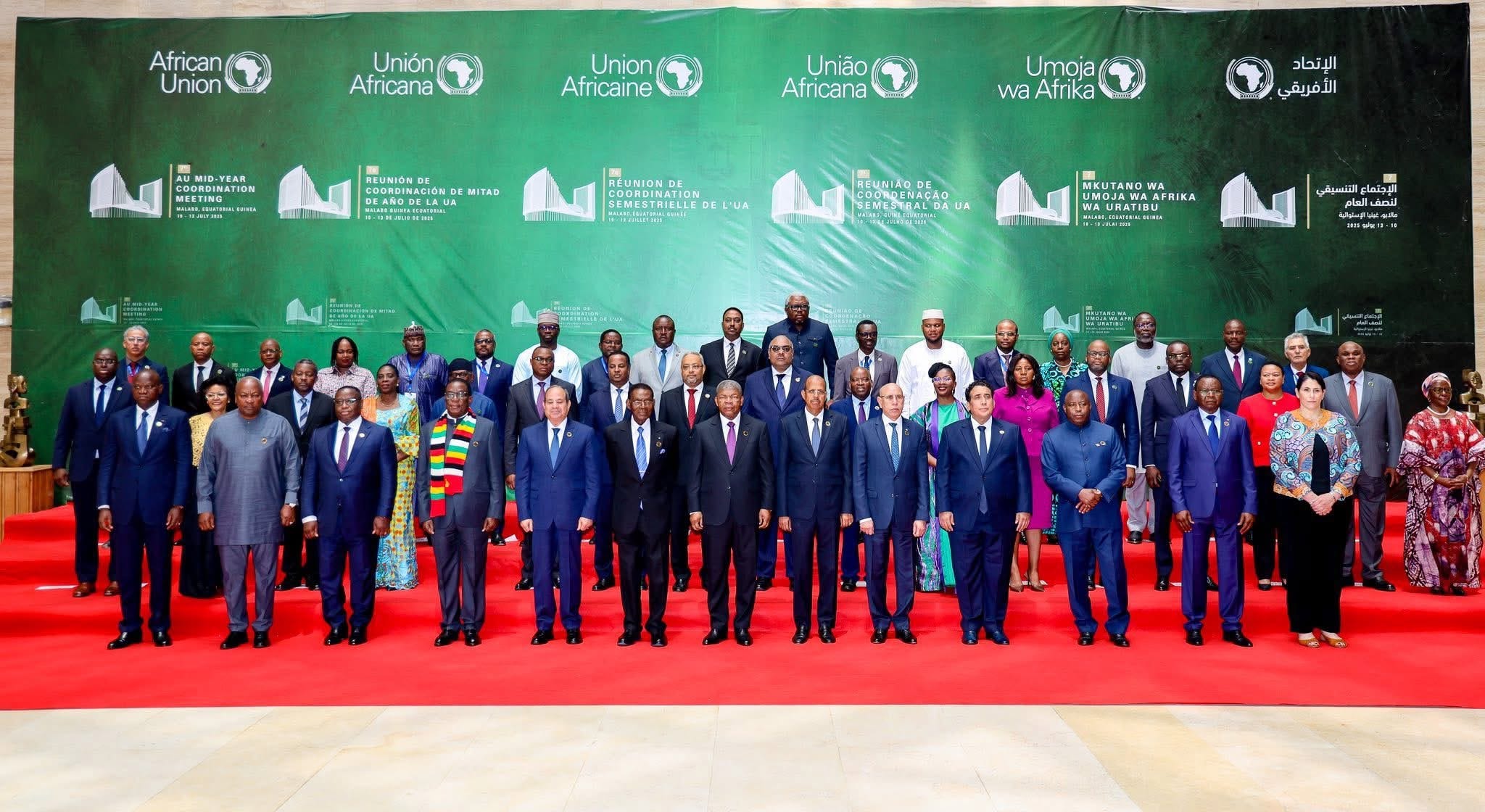
At a moment when the international system is marked by profound vacuums of trust and mediation, Africa appears content to accept the role of non-entity. The escalating confrontation between the United States and Israel on one side and Iran on the other has opened a rare diplomatic space. Yet the African Union and its member states remain largely spectators, as though the continent has internalised the hierarchical logic first imposed upon it at the Berlin Conference of 1884–85.
That infamous gathering of European powers partitioned Africa without a single African representative at the table. Maps were redrawn, borders imposed, and destinies decided by outsiders who viewed the continent as an empty space awaiting their strategic convenience. Today, a quieter form of exclusion threatens to take hold: not through formal colonial decrees, but through deliberate self-absence from the negotiations that will shape the emerging multipolar order.
The vacuum in global mediation is unmistakable. Traditional Western interlocutors are widely perceived as partisan. Gulf states carry their own regional rivalries. China and Russia pursue distinct strategic interests that limit their credibility as honest brokers. Into this breach, Africa could step with a degree of relative neutrality that few other regions can claim. Instead, the continent watches from the sidelines.
Nowhere is African vulnerability more evident than in the ongoing energy crisis. Successive shocks—from the Russia-Ukraine war to disruptions in the Red Sea and heightened tensions in the Middle East—have driven up the cost of imported refined petroleum products across much of the continent. Landlocked nations and coastal economies alike feel the squeeze as transport costs soar, food prices climb, and fiscal space shrinks.
Many African states possess significant hydrocarbon reserves, yet infrastructure deficits, regulatory uncertainty, and limited refining capacity leave them dependent on global markets they do not control. The energy crisis is therefore not an abstract geopolitical concern; it is a daily lived reality that undermines development plans, exacerbates inflation, and fuels social discontent. Precisely because Africa suffers disproportionately, it has both the moral authority and the practical incentive to seek de-escalation.
A peace ambassador role between Washington, Jerusalem, and Tehran is not an exercise in sentimental idealism. It is a calculated recognition of national and continental interest. Several African countries maintain functional diplomatic and commercial ties with Iran, including technical cooperation and energy-related partnerships. Others enjoy longstanding security, developmental, and investment relationships with the United States and, in selected cases, with Israel.
This dual connectivity, combined with the absence of deep historical entanglement in the core Arab-Israeli or Persian Gulf rivalries, positions African diplomacy uniquely. An African-led initiative would not be burdened by the same legacy of suspicion that often attaches to Western or certain regional mediators. That comparative advantage remains largely unused.
The African Union has so far declined to occupy this space with any sustained or imaginative effort. Periodic statements of concern are issued. Resolutions are adopted. High-level visits occur. Yet no coherent diplomatic strategy has emerged to position the continent as a consistent interlocutor capable of facilitating dialogue or confidence-building measures. The organisation that once projected itself as the institutional expression of African agency appears content with reactive diplomacy.
By remaining largely absent, the AU risks confirming the very marginalisation it claims to resist. The parallel with Berlin is not merely rhetorical. Then, Africa was physically divided by external powers. Today the partitioning is subtler: spheres of influence, preferential financing, military access agreements, and critical mineral deals continue to be negotiated with limited continental coordination. Silence in the most consequential security and energy disputes of the moment reinforces the pattern.
Critics will inevitably argue that Africa lacks the hard power, the internal coherence, and the diplomatic bandwidth to play such a role. Governance challenges, competing national interests, and institutional weaknesses within the AU itself are real and cannot be dismissed. Coherence, however, is rarely a precondition for action; it is more often forged through purposeful collective engagement.
Africa today possesses leverage that previous generations did not. Its demographic weight is rising. Its share of global critical minerals essential to the energy transition is substantial. Its markets are expanding. These assets, if strategically deployed, can translate into diplomatic influence. Refusing to use them in pursuit of de-escalation is not strategic restraint; it is a form of collective abdication.
Concrete initiatives need not aim to resolve the entire Israeli-Iranian or American-Iranian confrontation in one stroke. More modest but meaningful steps are available: facilitating technical discussions on maritime security along the Red Sea and Gulf of Aden corridors; proposing confidence-building measures around energy infrastructure protection; or hosting Track II dialogues that keep informal channels open when official ones freeze. Such efforts would signal seriousness and capability.
The emerging world order remains fluid. It is still contested and not yet fully institutionalised. Those who claim seats at the table will help shape the rules that govern energy security, trade routes, and conflict management. Those who remain silent will continue to live under arrangements designed primarily by others. Africa’s demographic and resource profile means the continent will be deeply affected by these rules regardless of whether it participates in writing them.
History rarely rewards prolonged hesitation. The diplomatic vacuum exists now. The energy costs are being paid now. The question confronting African leaders and the institutions that speak in their name is straightforward: will the continent once again allow itself to be mapped by external powers, or will it finally insist on drawing its own coordinates on the international stage? The choice is still available, but it will not remain so indefinitely.
About the Author
Cyril Jengo Snr holds an M.Phil. in Political Economy from the University of Sierra Leone. He is a business professional working in marketing and sales within the telecommunications industry.