
On 16 September, an Extraordinary issue of The Sierra Leone Gazette, the official record in which new laws take effect, redrew the country’s map. It created two new districts (Bandajuma and Kpanguima), a second Freetown city council, a new Lungi City Council, three new rural councils in the Western Area and another wave of chiefdoms. On paper, Sierra Leone now has 18 districts instead of 16. Officials say this will bring the state closer to the people. Yet the money and the appointments, along with the final say over anything that matters, remain in Freetown.
In my earlier piece in The Afroscope Media on September 28, I argued that Sierra Leone’s failures have less to do with which party governs than with how the state is built: a country of provinces run as though it were one city, with nearly every decision and budget line of consequence waiting on Freetown. The new map is that design made bigger. By multiplying administrative units while keeping control at the centre, the state is expanding a system built to fail its citizens, one that serves instead to insulate the political elite.
The APC’s Blueprint
To be fair, the SLPP did not invent this playbook. It is perfecting one the APC wrote. In 2017, months before a general election, the APC government of Ernest Bai Koroma used the same language of correcting historical wrongs and deepening decentralization to create Karene and Falaba districts, both in its northern heartland, carve a new North West Province out of the old Northern Province, and split colonial-era chiefdoms until the national count rose from 149 to 190. Nearly a decade later, the promised prosperity has not arrived. Karene and Falaba remain remote and badly served, and Chief Minister, David Sengeh, has himself admitted that splitting the chiefdoms set neighbouring paramount chiefs, the hereditary rulers who administer them, against one another over boundaries and land. The APC proved that multiplying territories does not multiply wealth. It only multiplies government payrolls.
The SLPP has not reversed any of this. It has kept it and enlarged it, and independent counts now put the number of chiefdoms around 190.
The Government’s Best Case
The government’s argument deserves to be heard at full strength. In the telling of Tamba Lamina, the Minister of Local Government, the problem is reach. A farmer in a remote corner of the south or east can lose a day’s income travelling to a district office for a service that should be on his doorstep, and a new district headquarters shortens that journey. The capital has its own version of the problem: a city that has grown well past a million people cannot, he argues, be run by one council, and Lungi, with the international airport and a planned economic zone, has earned the standing of a city. The arrangements written in 2004, for a country just out of war, no longer fit. These are real problems, and anyone who has travelled a rainy-season road in Pujehun knows it.
Political Mapmaking
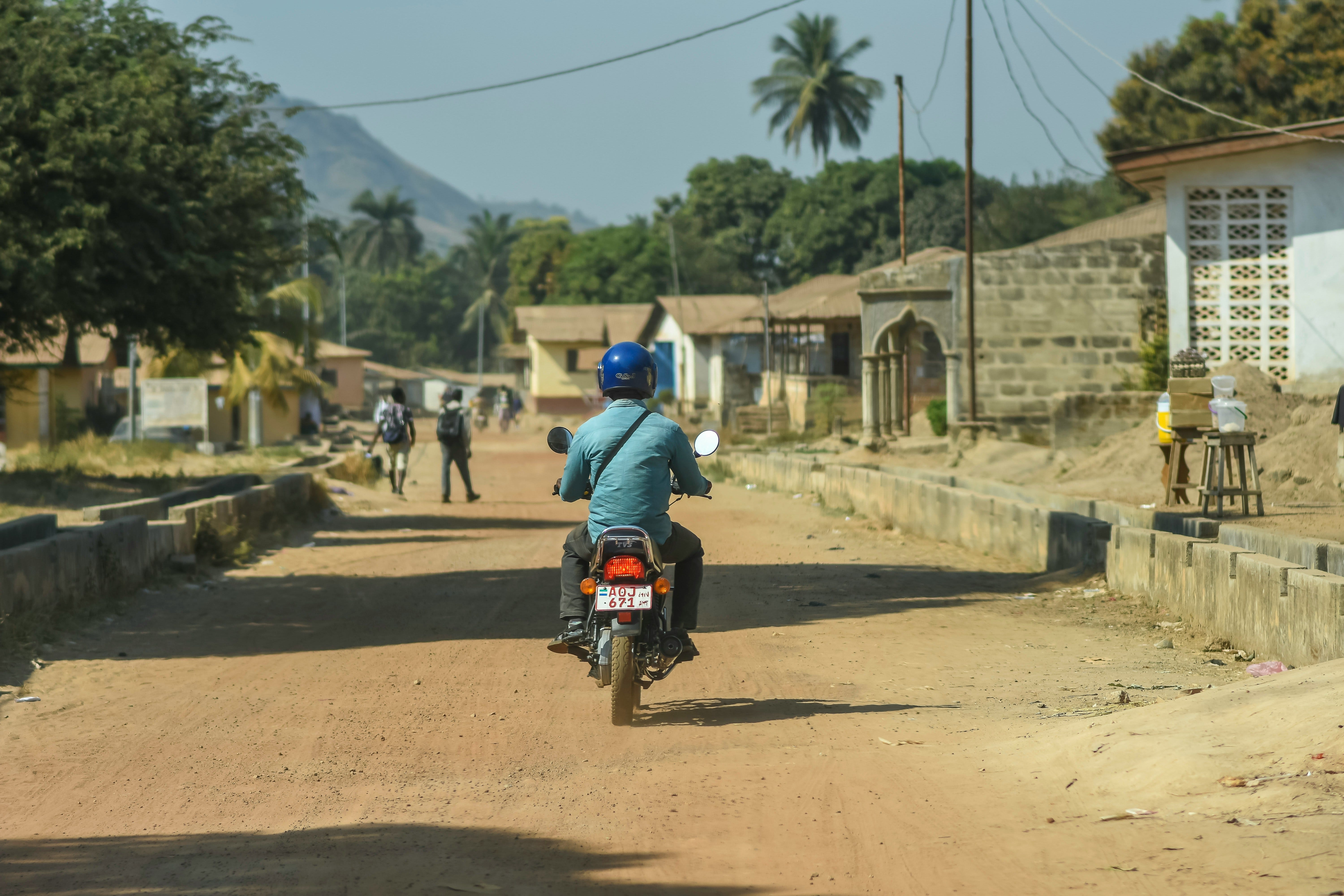
But if the problem in Pujehun is distance, why does each new district arrive with its own council, its own administrators and its own official vehicles, but no new money for clinics or schools? On paper, Sierra Leone’s 22 local councils already hold 78 functions devolved from 17 ministries, and the World Bank found that the money they receive to perform them falls far short of what the work requires. A new council in Bandajuma will wait on the same delayed grants from the same Ministry of Finance as every council before it, and each new chiefdom brings its own fight over who becomes chief, along with another set of officials with claims on land and taxes. Moving the building closer to the people achieves nothing if the building has no budget and no authority. Karene and Falaba prove this point entirely. On paper, the residents of Kamakwie and Mongo finally got their own local governments; in practice, they inherited empty bureaucratic shells.
The location of the new districts tells its own story. Both are carved from Bo, Pujehun, Kenema and Kailahun, the SLPP’s southern and eastern heartland, in the same way Karene and Falaba were carved from the APC’s north. The timing matters, because on 10 August Parliament declared passed a constitutional amendment, after 49 APC MPs walked out and with one key clause winning 96 votes where the Constitution requires 100. If it survives the Supreme Court, which began hearing the challenges on 7 October and has yet to rule, a presidential candidate could win outright with 50 percent plus one, provided she also takes 20 percent of the vote in two-thirds of the districts. So a government that adds two districts inside its own stronghold, at the same moment it changes that rule, has rewritten the arithmetic of the next election in its own favour.
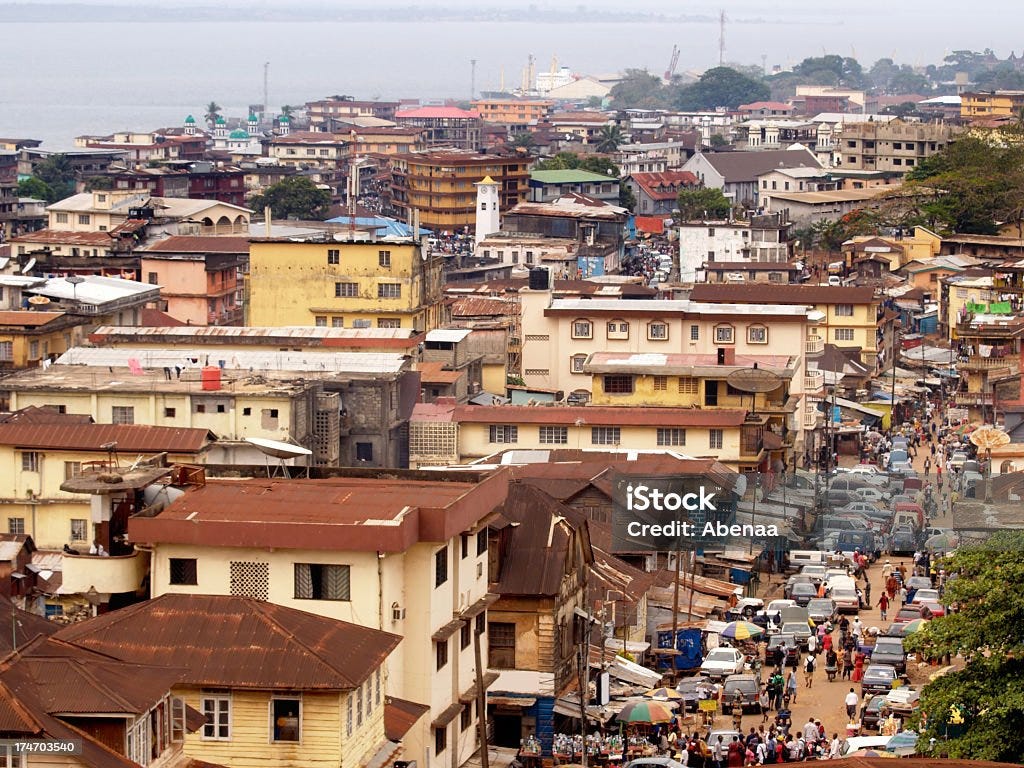
Then there is Freetown. Ministers insist the capital is not being split. If that is true, why does the Gazette give it a second city council, Freetown West, without settling who collects which taxes or who clears which drains? The city’s tax base is narrow and concentrated: the council’s own reform found that the top quarter of properties hold 70 percent of revenue potential. Divide the city without a legislated equalization formula and the crowded, flood-prone East End is left to fund itself. The same Gazette also creates new rural councils at Mountain, Waterloo and York, inside the territory of the Western Area Rural District Council. Both Freetown City Council, led since 2018 by mayor Yvonne Aki-Sawyerr, and the rural council, under chairman Kasho Holland-Cole, are run by the APC. The peninsula has two local councils, the opposition governs both, and the government is breaking up both. Is that a coincidence?
The data behind all this is no better. The Lawyers’ Society of Sierra Leone warned that creating localities ahead of the scheduled 2026 census conflicts with the Constitution and with the Local Government Act’s own requirement that population inform new boundaries. The only recent count, the 2021 Mid-Term Census, recorded Freetown’s population falling by more than 40 percent while the ruling party’s regions grew, a result the mayor called a significant undercount. Redrawing the map first and counting the people later is backwards for a reform that claims to serve them.
Put all of this together and it is hard to call it decentralization. It is an expensive form of political mapmaking, partisan and unilateral, imposed by presidential order without a referendum, an independent boundary commission or a credible census. The APC did it in 2017, and the SLPP is doing it on a bigger scale in 2026. Neither did it for the farmer in Pujehun or Falaba.
Move the Money, Not the Lines
The alternative is districts that actually govern, and a far smaller centre. Halt the 18-district expansion and return to the map that existed before 2017: twelve provincial districts in three provinces, which means folding Karene and Falaba back into their parent districts and the North West Province back into the Northern Province, with the Western Area governed as a single unit.
The Western Area needs to be a single unit because Freetown long ago spilled past its official boundary into Waterloo, Grafton and the hills, all of them classified as rural; even the contested 2021 census counted more people in Western Area Rural than in the city itself. Waste, drainage, water, flooding, land use planning and transport do not stop at that line, and the Ministry of Health already runs the whole peninsula as a single health district. One metropolitan council for the entire Western Area, with guaranteed ward budgets so that York, Tokeh and the mountain villages are not swallowed by the city, would pool the tax base and end the bureaucracy of blame. Some will call this a gerrymander of my own. It is hard to see how, since the APC already runs both councils and party control would stay exactly where it is.
Then apply one rule across the country: everything that can be run locally should be. The centre keeps the short list of things only a national government can do: defence, foreign affairs, the currency, national standards and regulation, the policing of corruption, the equalization formula that protects poorer districts, and the national infrastructure that binds the country together, from the trunk roads and railways that connect one region to another to the ports and national power lines. Everything else moves.
When a function moves, its budget, its staff and its payroll must move with it, and the ministry that used to run it should shrink or close. This is the step every government since 2004 has avoided. Councils were handed functions while Freetown kept the money and the people, which is why a country with 78 functions devolved on paper still runs on the old machine. If the minister, the deputy ministers, the permanent secretary, the directors and the vehicles all stay in Freetown, what exactly has been devolved? Nothing, except a second bureaucracy to supervise the first.
Start with the services people feel every day:
Primary health care. Councils receive health grants and nominally oversee district services, but the Ministry of Health’s own 2017–2021 strategic plan concedes they have little control over staff, whose payroll is held centrally, above even the ministry itself. The result borders on the absurd: in the districts surveyed, just over half of clinical staff in primary health units work without any salary at all. The council should hire, pay and discipline its own clinic staff, and answer for an empty dispensary at the ballot box.
Basic education. Primary and junior secondary schooling were among the first functions devolved to councils, yet the Teaching Service Commission, a central body created in 2011, still recruits, deploys, transfers and promotes every teacher. Put school maintenance and teacher deployment under the council, so that a leaking roof finally has an owner.
Feeder roads and water. The roads that carry a district’s harvest and the small systems that carry its water belong with the people who use them, not with national agencies that schedule repairs from the capital.
Power. A district should be able to commission, own and maintain its own mini-grids and solar systems, rather than wait for a national utility to reach it, and answer for whether the market and the clinic have light after dark.
Then fund those councils by law, not by favour. Kenya’s constitution guarantees its counties at least 15 percent of national revenue, shared by a formula weighted toward poorer, more populous and larger counties. A decade on, skilled birth attendance had risen from 48 to 89 percent. Not all of that is devolution’s doing, and Kenyan counties still complain of late transfers. But predictable money, paid by formula and on schedule, is what allows a council to plan instead of waiting on Freetown.
Critics will say the districts lack the capacity, and some do. But how is capacity ever built if the money and the authority never arrive? Freetown built its own when it overhauled its property tax and raised its revenue potential five-fold. And to stop each government from redrawing the map to suit itself, no boundary, including the ones I propose, should move again except by an independent commission applying a published formula to verified census figures, and no district should be created or dissolved without a referendum in the areas affected and a two-thirds vote of all members of parliament.
The way forward: move the money and the authority, not just the lines on the map
The fundamental danger of this architecture, as I argued before, is that it makes every national election existential. Whoever wins State House wins every clinic, contract and appointment in the country, so losing feels like dispossession and every government is tempted to redraw the map before the next vote. That is how a country of seven and a half million people ends up with 18 districts, more than 185 chiefdoms and the same broken roads. Councils that were properly funded and answerable to their own voters would lower those stakes, and make local elections the ones that decide whether services actually work.
The new map gives Sierra Leone two more districts, a second council for its capital and more chiefdoms than ever. It gives no district a single power it did not already have. Until a government is willing to move the money and the authority, and not just the lines, the map will keep changing while the roads in Kono and the schools in Kailahun stay exactly as they are.
About the Author
Kelfala Lebbie is a Sierra Leonean who has worked in international development for over a decade, focusing on governance and public-sector reform.