
Every few years we choose between two parties, and the choice changes almost nothing for an ordinary Sierra Leonean. The school still has no roof. The clinic still has no power. The road to the district headquarters still washes away with the rains. We read this as a failure of personnel and return to the ballot expecting different men to produce a different country.
It is not a failure of personnel. It is a failure of architecture. Since before independence we have governed a country of provinces as though it were one city. Every budget line and decision of consequence routes through Freetown, where it is slowed, politicized and quietly consumed. That is the design. Corruption is what the design produces, not an accident that befalls it.
So the reform that matters most is the one nobody campaigns on. Cut the central government by eighty percent and move the functions, the money and the accountability to the districts.
The Ministry of Finance does not need a Deputy Minister 1, a Deputy Minister 2 and eight more behind them. Freetown does not need to approve a classroom in Pujehun or a borehole in Koinadugu. Education, planning, healthcare, water and electricity belong to district authorities, funded and answerable directly. What remains does the work the centre alone can do: setting the national agenda and the standards every council must meet, policing corruption, mobilizing and distributing resources, and building the highways, railway and power lines that let Kono’s farmers and Bo’s markets share one economy. It also publishes each district’s results against those standards, so voters can compare their council with the next. Such a centre employs fewer people and asks more of them.
Return Sierra Leone to its twelve provincial districts plus the Western Area, in place of the sixteen we have and the eighteen now proposed, and end the boundary-drawing that manufactures safe seats and the disputes that follow. The APC began it and the SLPP is finishing it, and their agreement is not the country’s consensus. No district should be created or dissolved, including under this proposal, without a referendum in the districts affected and a two-thirds vote of all members of parliament. No boundary should be drawn except by an independent commission applying a published formula to verified census figures.
Consider what our elections decide: one contest, every five years, determining who controls the classrooms, clinics, contracts and appointments everywhere. That is why our politics is existential and losing feels like dispossession. Winner-take-all is not a flaw in how we campaign; it is what is on offer. Thirteen district contests replace one, none able to deliver the whole country. At the community level the question is not which party you belong to but whether the roof is on the school. You can walk past the school.
The same applies to policing corruption. The Anti-Corruption Commission will tell you it convicts over ninety percent of those it charges. That answers the wrong question. The question is who gets charged. The president appoints the commissioner and can remove him, the commission sits under the Ministry of Justice, and since 2019 officials may settle out of court, repaying what they took on undisclosed terms.
Then there is the detail that settles it. Two former commissioners appointed under the last APC government now compete to be that party’s 2028 candidate, one of them now serving as its lawyer, and the sitting commissioner has not ruled out seeking the SLPP nomination. Nor is it hidden: the Commission’s own newsletter records the President, the First Lady and the SLPP’s then national chairman standing as godparents to the commissioner and his wife in 2024. The office meant to investigate both parties is now a staging ground for leading them. None of this requires improper conduct. It requires only an office where the question can always be asked and no honest occupant can answer it.
District councils cannot do this: an office reporting to local politicians is captured. The answer is a national body built so that nobody with power over a career has power over a case. A commissioner nominated by an independent panel and confirmed by two-thirds of all members of parliament. One fixed, non-renewable seven-year term, removable only on cause proven before a tribunal. A budget charged first on the Consolidated Fund. Independent prosecutorial authority, and a five-year bar on party office for the commissioner and senior staff. A public register of cases opened, dropped and charged, so selectivity becomes arguable rather than whispered. Put an office in every district, but recruit, pay and rotate investigators nationally, so whoever audits a budget is not the cousin of the man who wrote it.
None of this shrinks the state’s ambitions. A national jobs program should hire Sierra Leoneans to build what their districts need; government creates jobs. Foreign investment alone has delivered a mining enclave and an import bill.
Four objections deserve answers. Our councils are not ready: true, which argues for sequencing, not inaction. Move functions in stages, tie transfers to audited results, and spend three years building capacity with the deputy ministers’ money. Capacity is built by carrying responsibility, not before it.
We would create thirteen small tyrannies: some capture is inevitable. But a captured district can be compared with an uncaptured one, and those being robbed live close enough to see it. A stolen district budget is a scandal; a stolen national budget is a Tuesday.
Devolution will entrench inequality: Kono has diamonds and Freetown a tax base; Falaba and Koinadugu have neither. So the transfer formula must be law before functions move, weighted by population and need, beyond ministerial reach.
Parliament will never pass it: much of this needs constitutional amendment, so it must be a citizens’ demand, not a party’s favour. Consider what happened in August 2026. The government put a constitutional amendment bill to a vote short of the hundred affirmative votes that two-thirds of the membership requires, the Speaker ruled a simple majority sufficient, the opposition walked out, and whether the constitution was lawfully amended now sits with the Supreme Court. That is the architecture defending itself, and it is the clearest argument yet for taking power out of its hands. Yet transfers, staffing and published accounts can begin under ordinary law. Prove it in four districts and amendment gets easier.
We have spent sixty-five years changing the occupants of a building designed to fail. The next election will not fix a school in Kailahun. Moving the power to fix it out of Freetown will.
About the Author:
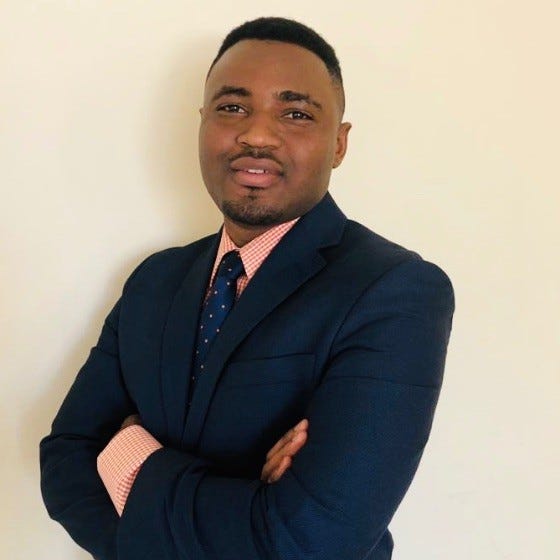
Kelfala Lebbie is a Sierra Leonean who has worked in international development for over a decade, focusing on governance and public-sector reform.